In 2004, I was emailing ten-minute audio files to friends—WAV files converted to MP3s, crude knowledge attachments that probably clogged their inboxes. I’d also design newsletters, print them at my favorite cyber café, and distribute them like samizdat. It felt revolutionary. I was bypassing gatekeepers, creating my own distribution channel.
Twenty years later, anyone with a smartphone can launch a podcast that reaches millions. The gatekeepers are gone. The revolution succeeded.
So why does it feel like we’re drowning?
From Radio Guilds to Algorithm Gods
There’s a straight line you can trace from radio stations to iPods to podcasts to whatever comes next, but the line isn’t just technological—it’s about who controls the microphone.
Radio had gatekeepers. Literal guilds. You needed licenses, equipment, expertise. The barriers weren’t just financial—they were institutional. Radio stations employed people who understood the craft: sound engineers, producers, editors. They had standards, however imperfect. If you wanted to broadcast, you had to pass through layers of filters that, yes, excluded many voices, but also maintained a baseline of quality and accountability.
Then came the iPod revolution. Suddenly, audio was portable, personal, decentralized. Podcasts emerged as the democratic alternative to radio—anyone could create, anyone could distribute. iTunes became the new gatekeeper, but it was a permissive one. The barrier to entry dropped to nearly zero.
Now we’re in the third phase: YouTube and visual platforms have hijacked what was once purely audio and transformed it into something else entirely. Podcasts aren’t really podcasts anymore—they’re webcasts, video shows, content streams. And the gatekeeper isn’t a company or a guild. It’s an algorithm.
Here’s what changed: Radio guilds excluded voices but cultivated expertise. Algorithms include all voices but cultivate nothing. The algorithm doesn’t care if you know what you’re talking about. It cares if you’re engaging, if you’re keeping eyeballs on screens, if you’re feeding the machine.
According to research by Odipo Dev, the podcasters who move the needle aren’t necessarily the most knowledgeable—they’re the ones who are already famous or who attract famous guests. The hierarchy is clear: personality first, storytelling second, connection to popular culture third. Expertise? Somewhere down the list, if it appears at all.
This isn’t a bug. It’s the design.
Information Without Transformation
Here’s my central claim: Podcasts are the new info-knowledge hubs, but most inform rather than educate, and that distinction is slowly poisoning us.
Information and knowledge aren’t the same thing. Information is raw material—facts, data, opinions, stories. Knowledge is information that’s been processed, contextualized, tested against reality. Information tells you what happened. Knowledge tells you what it means and what to do about it.
Most podcasts traffic in information. They’re optimized for it. Information is easier to produce, easier to consume, easier to monetize. You can spin up a podcast about any topic with minimal preparation. Interview someone interesting, have a conversation, hit publish. The bar is low because the algorithm rewards volume and consistency over depth and accuracy.
But here’s the paradox: the more information we have access to, the less knowledge we seem to accumulate. We’re drowning in content but starving for wisdom.
Alvin Toffler predicted this in Future Shock: “The illiterate of the future will not be those who cannot read and write, but those who cannot learn, unlearn, and relearn.” He was warning about exactly this moment—when the abundance of information would overwhelm our capacity to process it into actionable knowledge.
We’re living in Toffler’s future. We have more voices than ever, more perspectives, more content. And yet we’re “ever learning but never coming to the knowledge of the truth,” as Paul wrote in 2 Timothy 3:7. The bandwidth for reflection, processing, and action is crowded to the point of paralysis.
Why We Confuse Access with Authority
There’s a cognitive trick happening that we need to name: the microphone effect. We unconsciously grant authority to people simply because they have a platform. If someone has a podcast with thousands of listeners, we assume they must know something. Why else would so many people be listening?
This is a classic case of circular reasoning amplified by social proof. The algorithm promotes what’s popular. What’s popular becomes more visible. What’s more visible attracts more listeners. More listeners create the impression of authority. And authority—real or perceived—attracts even more listeners.
The result is a self-reinforcing loop where popularity masquerades as expertise.
Compare this to the old guild model. If you wanted to be a radio host, you had to demonstrate competence—not just in speaking, but in research, in interviewing, in production quality. You had to work your way up. The system wasn’t perfect or meritocratic, but it did create some correlation between platform and preparation.
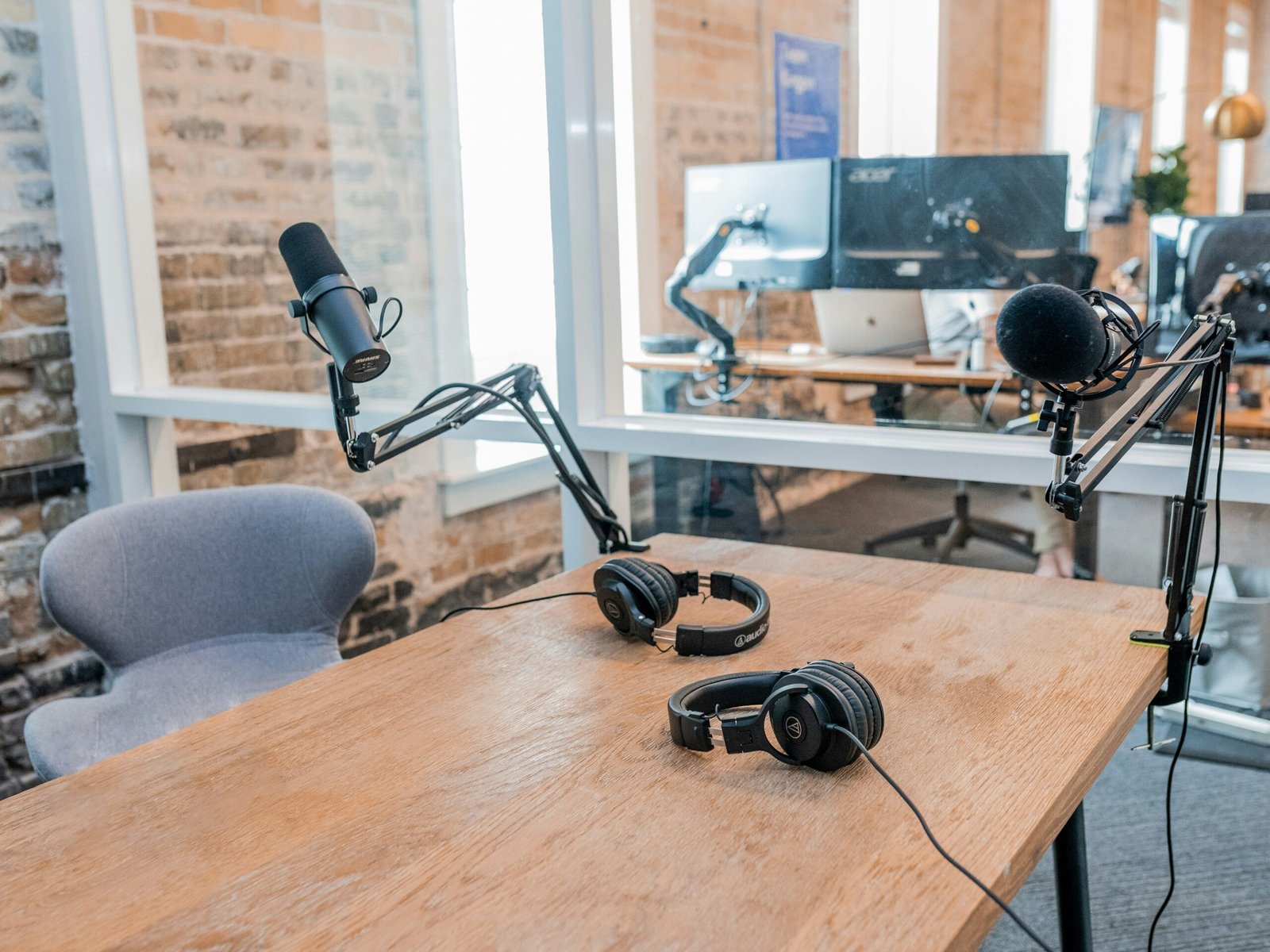
Now? Anyone with a mic can be considered an authority. And I mean that literally—the barrier is a microphone and an internet connection.
This democratization is both beautiful and terrifying. Beautiful because it gives voice to people who were systematically excluded—perspectives that challenge dominant narratives, stories from marginalized communities, ideas that traditional media would never touch. Terrifying because it also gives equal platform to conspiracy theorists, grifters, and people who confidently speak about things they don’t understand.
The psychological problem is that our brains aren’t equipped to distinguish between the two. We evolved to trust confidence, not accuracy. We’re drawn to good storytelling, not rigorous analysis. The podcaster who’s certain and entertaining will always outperform the expert who’s cautious and nuanced.
The Podcast Spectrum
Example 1: The Personality-Driven Model
Look at the top of Odipo Dev’s list—the most successful podcasters in the rankings. Many built their following elsewhere first: media personalities, celebrities, people who already had brand recognition. They’re not successful because of their podcasting skill—they’re successful because fame is portable.
This creates a strange dynamic. The podcast becomes a vehicle for personality rather than expertise. The content matters less than the host’s charisma, their connection to popular culture, their ability to generate clips that go viral. It’s entertainment labeled as education.
I’m not saying these shows have no value. Many do. But the model privileges access over insight. If you can book famous guests, you’ll succeed regardless of whether you ask them good questions or push back on their assumptions. The guest’s fame does the work.
Example 2: The Financial Podcast Gap
When I analyzed the top fifty podcasts, I expected to find numerous financial literacy shows. Money matters. Financial decisions shape lives. Surely there would be a robust ecosystem of podcasts helping people navigate this crucial domain.
Instead, I found one purely financial podcast: Financially Incorrect with Barack Bukusi, which is guest-driven. There’s Money Wise with Rina Hicks, which focuses on instruction and teaching. And Founders Battlefield with Michael Macharia is emerging. That’s essentially it.
Why so few? Because financial literacy requires depth, patience, and a willingness to say “this is complicated” instead of “here’s the one trick.” It requires education, not just information. And education doesn’t perform well in an attention economy.
CTA Podcast by Astar Njau—top of the TikTok podcasters—occasionally touches on financial matters through biographical success stories. But that’s information about money, not knowledge of how to manage it. It’s the difference between hearing about someone who got rich and learning the principles that could improve your own financial life.
The gap reveals the problem: podcasts that inform get popular; podcasts that educate get overlooked.
Example 3: The AI Content Flood
Now add artificial intelligence to this mix. We’re entering an era where content can be generated at scale, where AI can create podcasts that sound credible, that mimic expertise, that optimize for engagement without any human who actually knows the subject matter.
This is Toffler’s nightmare compounded. Not only is the information supply overabundant—now some of it isn’t even created by humans. The pollination of memes, truths, fake news, and vibes is about to become a hurricane. And there’s no guarantee of what people will consume, no filter for quality or accuracy.
The democracy of current knowledge platforms isn’t guild-guided. There are no rules, no standards, no quality control. Just algorithms optimizing for watch time and click-through rates.
In Defense of Disorder
I need to acknowledge something: I sound like a curmudgeon longing for the days of institutional gatekeeping. And there’s a danger in that nostalgia.
The old guild system didn’t just maintain standards—it excluded people. Systematically. If you weren’t educated in certain institutions, didn’t speak in certain ways, didn’t look like the people who already had platforms, you couldn’t get through the gate. The barriers protected quality, yes, but they also protected power.
The podcast revolution gave voice to people who would never have had radio shows. Indigenous knowledge holders. Working-class perspectives. Global South creators who could bypass Western media gatekeepers. LGBTQ+ voices in countries where traditional media won’t touch their stories. The messy, unfiltered, algorithm-driven chaos has genuine democratic value.
And honestly? Some of the best podcasts I’ve encountered are produced by people with zero traditional credentials. They’re just deeply curious, rigorously honest, and willing to do the work of actual learning. They’re proof that expertise can come from anywhere.
The problem isn’t the democratization itself. The problem is that we’ve democratized the platform without democratizing the literacy to navigate it. We’ve given everyone a microphone without teaching them—or their audiences—how to distinguish information from knowledge, opinion from expertise, confidence from competence.
What I Learned from My Cyber Café Days
Those early days of emailing audio files and printing newsletters—I thought I was building something important. And maybe I was. But I was also naive about what happens when the barriers fall completely.
I believed that if good ideas could just reach people without institutional filters, truth would naturally rise to the top. Better arguments would win. Knowledge would flow freely.
I was wrong. Or at least, I was incomplete.
Truth doesn’t rise naturally. It requires work—the work of verification, of critical thinking, of resisting the seduction of simple answers. And that work is hard when you’re swimming in an ocean of content, when the algorithm is constantly serving you things designed to trigger engagement rather than understanding.
Now when I listen to podcasts—and I listen to many—I find myself constantly asking: Is this person informing me or educating me? Are they showing me new information, or are they helping me develop the capacity to think differently? Are they filling my head with facts, or are they sharpening my ability to evaluate facts?
Most of the time, honestly, it’s the former. And most of the time, I’m complicit. Because information is easier to consume than knowledge. It requires less of me. I can listen passively, feel like I’m learning, and move on to the next episode without actually changing anything about how I think or act.
The Bandwidth Crisis
So we return to the question: Why does the democratization of voice feel like drowning?
Because transformation is not a function of information volume—it’s a function of reflection depth. And we’ve optimized for volume at the expense of depth.
Toffler was right. The future’s illiterates aren’t people who can’t access information—they’re people who can’t interpret it, who can’t learn, unlearn, and relearn. They’re people who consume endlessly but transform never.
The podcast revolution hasn’t failed. But it hasn’t succeeded either. We’ve created the most accessible knowledge distribution system in human history, and we’ve used it primarily to distribute information instead of wisdom, opinions instead of understanding, engagement instead of education.
The democracy of current platforms isn’t guild-guided, and maybe it shouldn’t be. But it needs something—some shared understanding of the difference between speaking and teaching, between having a platform and having something worth saying, between being popular and being right.
Here’s what keeps me up at night: Anyone with a mic may now be considered an authority, but authority without accountability is just noise. And we’re generating more noise than any generation in human history.
The consequence of overabundant information supply isn’t just overload—it’s the crowding out of the bandwidth we need to reflect, process, and act. We’re ever learning but never coming to the knowledge of truth because we’ve confused access to information with the acquisition of wisdom.
Podcasts are indeed the new info-knowledge hubs. The question is: Are we building hubs that inform, or hubs that transform?
Because if all we’re doing is moving content from one format to another—from radio to iPod to podcast to AI-generated stream—without addressing the fundamental challenge of how humans convert information into knowledge and knowledge into wisdom, then we’re just drowning in higher fidelity.
What would it mean to be literate in Toffler’s future? Not to consume less—that’s not realistic or even desirable. But to develop the capacity to distinguish signal from noise, expertise from performance, transformation from mere information transfer.
That’s the work ahead. Not to return to the guilds, but to build something new: platforms that democratize voice while cultivating wisdom, that lower barriers to speaking while raising standards for thinking, that give everyone a microphone while teaching everyone to listen.
Until then, we’re just ever learning, scrolling deeper, and coming no closer to truth.