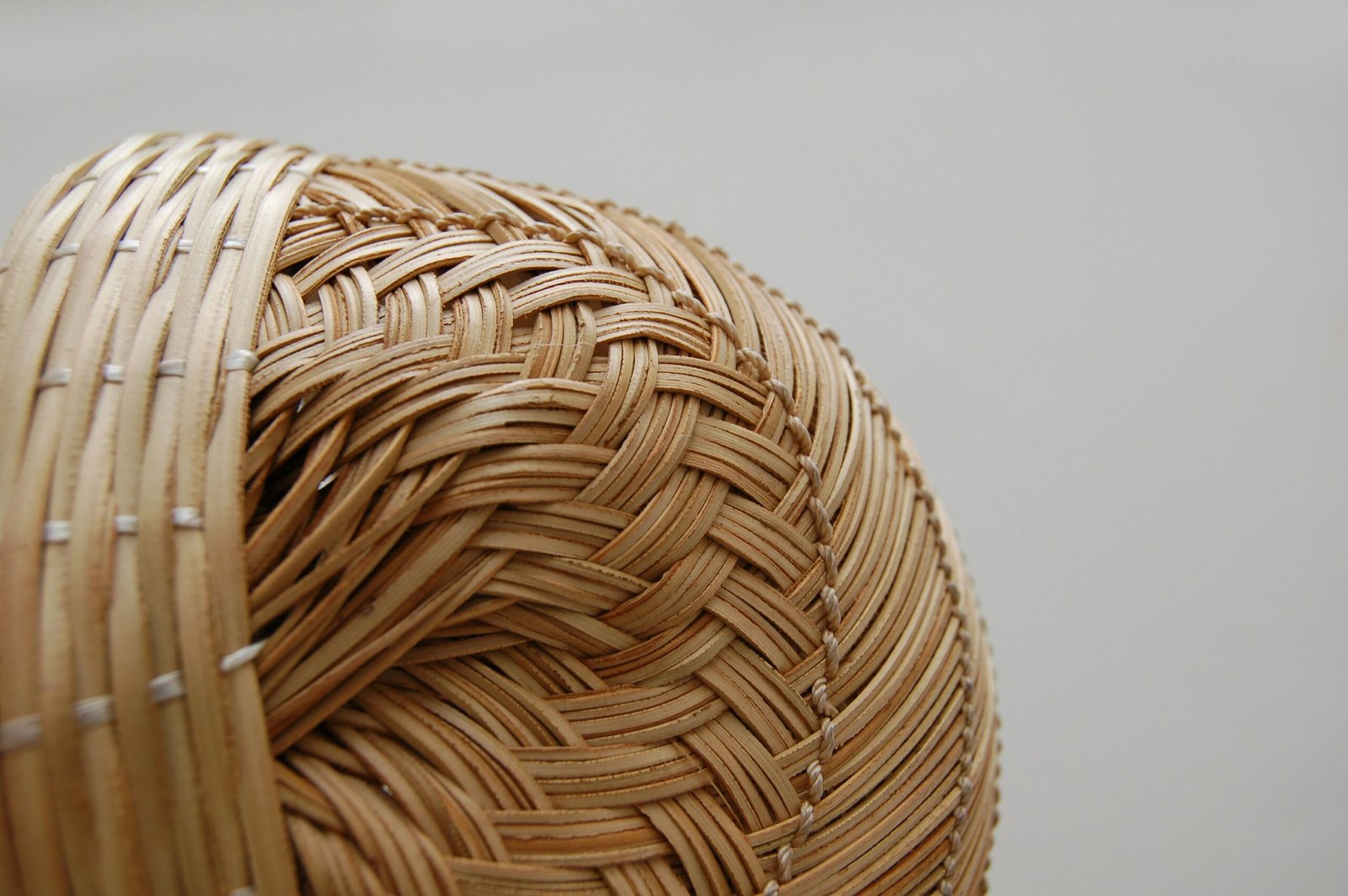
There’s a word in my mother tongue that I have been thinking about lately: chaage. It means granary. Not just any storage structure, but the specific kind where you keep seeds for tomorrow. What strikes me now, decades after hearing her use it, is what the word really represents: the radical act of believing the future exists and that you’ll be there to see it.
Most people think storage is about scarcity—holding onto things because you’re afraid of running out. But storage, real storage, is about abundance. It’s about having so much confidence in tomorrow that you’re willing to sacrifice today’s meal for next season’s harvest. That inversion changes everything.
The Griots and the Algorithm of Memory
Before Alexander the Great marched into North Africa, the continent already had universities and libraries. My History 101 professor, Dr. Mwale Olenja, taught me this in 1992, but the most fascinating part wasn’t the institutions themselves—it was what happened when they were destroyed. War has always thrived on the annihilation of memory. Burn the books, scatter the scholars, and you can rewrite history.
But the invaders missed something crucial. They burned the libraries but couldn’t touch the griots.
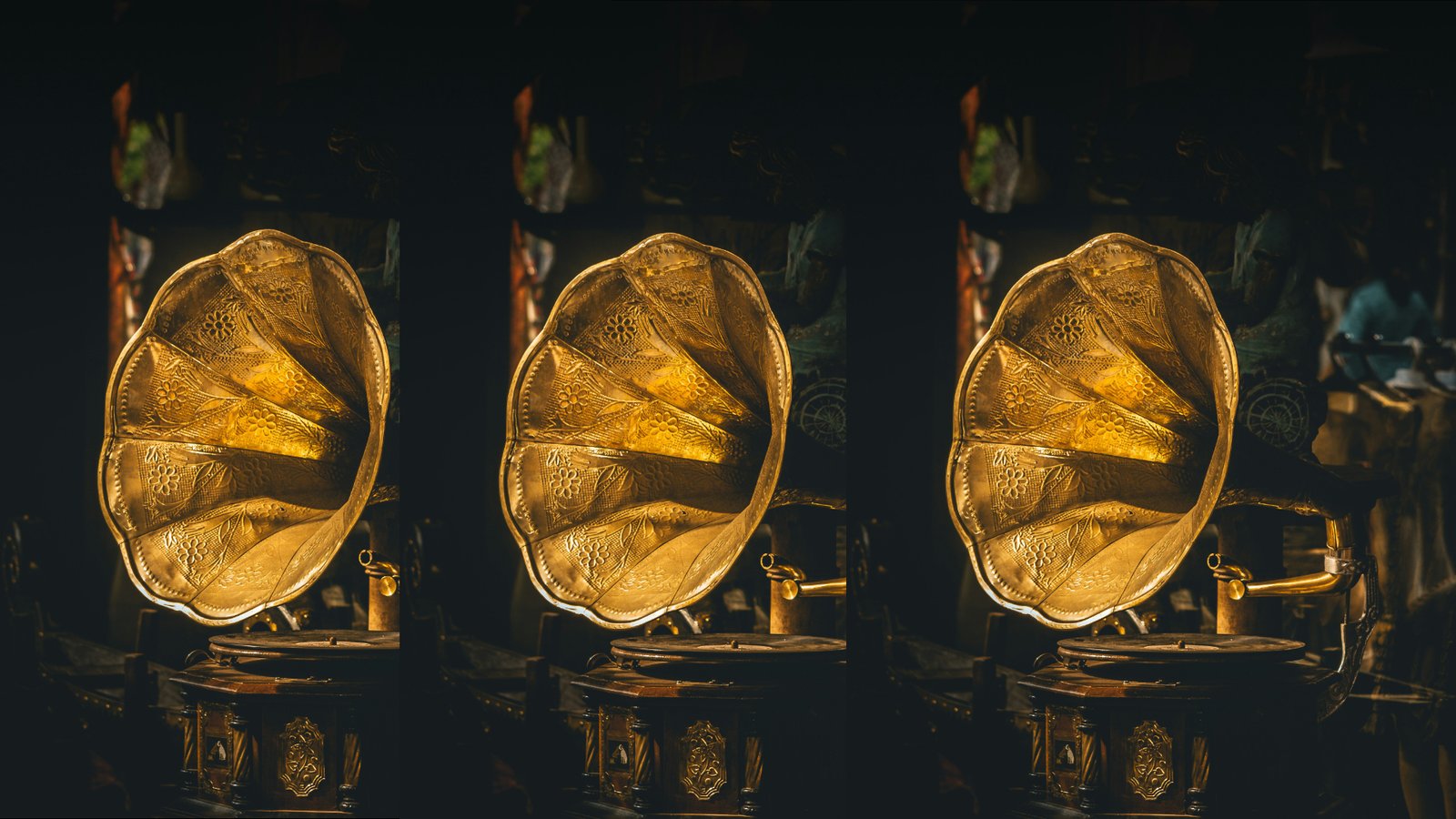
In West Africa—Mali, Senegal, Gambia, Burkina Faso—among the Mande peoples, the Fulɓe, Hausa, and Songhai, there existed specialists who were essentially information cryptographers. The griots didn’t write things down. They wove knowledge into music, into stories, into rhythms that children would hum without understanding they were memorizing legal codes, genealogies, agricultural calendars, trade routes. You can burn a book. You cannot burn a song that ten thousand people already know by heart.
These weren’t just entertainers. They were the living architecture of knowledge management, proving something we’ve forgotten in our age of cloud storage: the most resilient storage systems are the ones that make preservation automatic, even unconscious. The griots turned memory into muscle memory. They made storage a performance, not a chore.
Curation Is an Act of Foresight
Here’s what I believe: Storage is not passive preservation—it’s active prophecy. When you decide what to save, you’re making a prediction about what future generations will need. You’re saying, “This matters. This will still matter when I’m gone.”
The African concept of the granary—chaage—reveals something modern knowledge management has lost. A granary doesn’t just store grain; it stores seeds. There’s a crucial difference. Grain is food. Seeds are food plus the next harvest plus all future harvests. Storage becomes multiplication becomes continuity becomes perpetuity.
This is what’s dying: the practice of storing not just information, but the capacity to regenerate information. We’re obsessed with content creation but indifferent to content curation. We generate more data every day than existed in the entirety of human history until 2000, yet we’ve never been worse at deciding what deserves to survive.
Why? Because we’ve mistaken abundance for permanence. We assume everything digital lives forever. But digital storage is the opposite of a granary. A granary requires maintenance, yes, but it’s designed for human-scale retrieval. You can walk in and take what you need. Digital storage requires entire civilizations of infrastructure—server farms, power grids, file formats that become obsolete, platforms that shut down, passwords that get forgotten.
The granary principle teaches us this: True storage is not about having access to everything; it’s about preserving the ability to create anything.
Why We’ve Forgotten How to Curate
There’s a cognitive bias at play here that doesn’t have a formal name, but I think of it as “availability euphoria”—the mistaken belief that because something can be accessed, it will be accessible. We confuse potential with preservation.
Consider what happens when everything is stored. When every email is archived, every photo uploaded, every thought tweeted. We create vast digital attics, stuffed with undifferentiated content. Nothing is curated because everything is saved. And when everything is saved, nothing is findable. Abundance without curation creates its own kind of scarcity—the scarcity of meaning.
Humans evolved to remember stories, not databases. The griots understood this instinctively. They didn’t try to preserve everything—they preserved what could be woven into narrative, music, ritual. They were ruthlessly selective because selection was the price of survival. A griot couldn’t carry ten thousand songs, so they carried the fifty that contained everything essential.
We’ve lost the discipline of that selection. Modern technology has removed the constraint, so we never develop the skill. We’re like people who never learn to pack efficiently because luggage is unlimited. Then one day the system crashes, the platform shuts down, the hard drive fails, and we discover we never actually knew what mattered.
There’s also a deeper psychology here: curation requires confronting mortality. When you choose what to preserve, you’re admitting that you won’t be there to preserve it yourself. You’re creating a time capsule for people who will exist after you don’t. That’s uncomfortable. It’s easier to hit “save all” and avoid the question entirely.
The Market, the Subdivision, and the Lost Archives
Example 1: The African Market Experience
Walk through any African market—Lagos, Nairobi, Accra—and you’re witnessing an extraordinary repository of knowledge. The vendor who knows which yams are from which region and how each should be cooked. The textile seller who can trace the history of a pattern back three centuries. The herbalist who inherited formulas her grandmother received from her grandmother.
This is living curation. But it’s dying.
Why? Because we’re not documenting it. We’re too busy creating content about markets—Instagram reels of colorful stalls, blog posts about “authentic experiences.” But we’re not storing the knowledge the markets contain. When that vendor retires, her expertise retires with her. We’ll still have the photos. We won’t have the wisdom.
The market experience should be curated the way the griots curated histories—not as data points, but as living narratives that can be passed on, adapted, regenerated. Instead, we treat markets as backdrops for content creation, not as content themselves.
Example 2: The Real Estate Subdivision of Ideas
Africa is being subdivided. Not just physically, though that too. Intellectually. Creatively. We’re taking the continent’s vast landscape of thought and carving it into micro-plots, each one barely large enough for a Twitter thread.
Look at how intellectual property works in the modern attention economy. Ideas are generated rapidly, consumed instantly, forgotten immediately. There’s no fallow period, no time for ideas to mature into seeds worth storing. Everything is harvest, nothing is planting.
This is the opposite of the granary principle. A granary assumes cycles—you plant, you grow, you harvest, you store, you plant again. Modern content creation assumes only harvesting. We’re strip-mining our own intellectual heritage, extracting maximum attention-value and moving on, leaving behind depleted soil.
Example 3: The Tales That Never Got Told
Consider Dahomey and Timbuktu. Both were centers of trade, learning, and power. Both have stories that could inspire contemporary case studies about economics, diplomacy, military strategy, governance. These aren’t ancient irrelevancies—they’re blueprint libraries for modern challenges.
But where are the curated narratives? Where are the trade aspirational narratives drawn from African historical precedent? Instead, we get prescribed models imported wholesale, implemented without adaptation, failing predictably. And then we’re surprised.
The failure isn’t lack of knowledge—it’s lack of curation. The knowledge exists, scattered across oral traditions, dusty archives, grandmother’s memories. But it’s not organized for retrieval. It’s not stored in the seeds that can be planted in contemporary soil.
When Curation Becomes Censorship
I need to be honest about something: curation can be dangerous.
The griots I’ve praised weren’t neutral archivists. They were often employed by rulers. They preserved the histories that served power. They could erase someone from memory simply by not singing their name. Curation is power, and power corrupts.
There’s also a valid argument that in the digital age, the cost of storage has dropped so dramatically that we should err on the side of keeping everything. Who are we to decide what future generations will find valuable? Maybe the seemingly trivial tweet from 2024 will be invaluable to the historian of 2124.
And I’ll admit—there’s something democratic about the everything-everywhere-all-at-once approach to information. The granary model is inherently elitist. Someone has to decide what seeds get stored. The griot chooses which stories live. The curator decides what’s worth preserving. In that choice lies the potential for exclusion, for silencing, for the perpetuation of existing power structures.
These concerns are real and serious. But I’d argue they’re not arguments against curation—they’re arguments for collective curation, for transparent curation, for curation that recognizes its own bias and invites challenge.
The alternative—saving everything—isn’t actually neutral. It privileges whoever has the resources to maintain the servers, whoever controls the search algorithms that determine what gets found. That’s curation too. It’s just curation by algorithm instead of by intention, and that’s more dangerous because it pretends not to be making choices.
What My Mother Taught Me Without Teaching
My mother never sat me down and explained knowledge management theory. But she practiced it. She told stories, always the same stories, in almost the same words. At the time, I found it repetitive. Now I recognize she was encoding.
She was making sure that certain things—values, lessons, histories—survived the format change from her generation to mine. She was being a griot without knowing the term. She was maintaining the granary.
I think about this now as I watch information cascade past me daily. Millions of words I’ll never read, videos I’ll never watch, ideas I’ll never encounter. And I wonder: what am I curating? What am I choosing to carry forward? What seeds am I storing for seasons I won’t see?
The practice of curation has become, for me, a spiritual exercise. Not religious, exactly, but concerned with what persists beyond my own existence. Every time I bookmark something, every time I share a piece of writing, every time I tell a story to my children, I’m making a small bet on the future. I’m saying: this matters. This is worth the effort of preservation. This is a seed.
It’s humbling because I know I’ll get it wrong. I’ll preserve things that turn out to be useless. I’ll lose things that turn out to be irreplaceable. But the alternative—curating nothing, preserving everything, which is the same as preserving nothing—that feels like a failure of nerve. A failure of hope.
The First Act of Hope
So I return to chaage, to the granary, to that word my mother used without ceremony.
Storage is the first act of hope. It’s the original human bet that tomorrow exists and that we have obligations to it. The granary isn’t just about managing scarcity—it’s about creating abundance for people we’ll never meet.
The African tradition understood this in ways we’re only now beginning to recover. The griots didn’t preserve everything because they understood that meaning comes from selection, from the stories that matter enough to remember. They turned knowledge into music because they knew survival required making preservation automatic, unconscious, cellular.
We’ve confused abundance with preservation and convenience with continuity. We have more information than any civilization in history and less wisdom about what deserves to survive.
The question isn’t whether we can store everything—we can. The question is: what are we willing to carry? What do we believe is worth the work of curation?
Because make no mistake—creativity is work. Curation is work. Building granaries, whether physical or intellectual, requires the kind of effort that says: I believe in a future I won’t see, and I’m investing in it anyway.
Against the allurement of infinite storage and effortless replication, we need to recover the dignity of the work of selection. We need industry practices that protect intellectual property not as individual assets but as collective seeds. We need an economy of dignity work—work that creates value for generations—not just jobs that extract value for quarters.
The griots are gone, but the need for griots is not. The granaries may be empty, but the principle of the granary is timeless.
What will you choose to carry forward? What seeds are you storing for the harvest you won’t live to see?
That choice—that curation—that’s where hope begins.